An inductor is a passive component which resists changes in electric current passing through it. When a current flows through it, energy is stored temporarily in a magnetic field in the coil. When the current flowing through an inductor changes, the time-varying magnetic field induces a voltage in the conductor, according to Faraday’s law of electromagnetic induction, which opposes the change in current that created it.
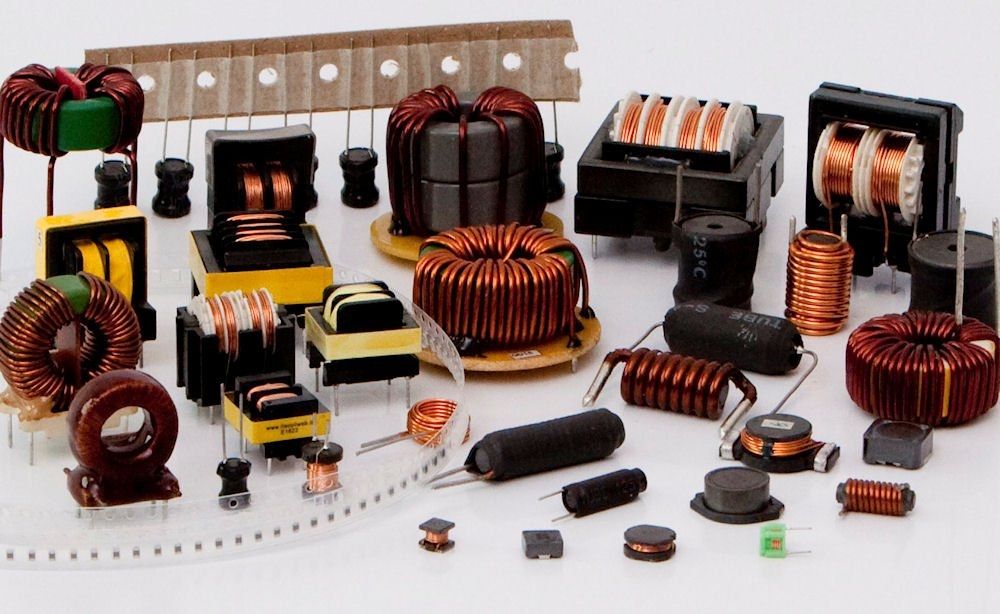
Inductors have values that typically range from 1 µH (10−6H) to 1 H.
Inductance (L) results from the magnetic field around a current-carrying conductor; the electric current through the conductor creates a magnetic flux. Inductance is determined by how much magnetic flux φ through the circuit is created by a given current i,
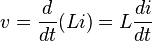
The dual of the inductor is the capacitor, which stores energy in an electric field rather than a magnetic field.
The ratio of the peak voltage to the peak current in an inductor energised from a sinusoidal source is called the reactance and is denoted XL.
Inductors have values that typically range from 1 µH (10−6H) to 1 H.
Inductance (L) results from the magnetic field around a current-carrying conductor; the electric current through the conductor creates a magnetic flux. Inductance is determined by how much magnetic flux φ through the circuit is created by a given current i,


The dual of the inductor is the capacitor, which stores energy in an electric field rather than a magnetic field.
The ratio of the peak voltage to the peak current in an inductor energised from a sinusoidal source is called the reactance and is denoted XL.


Parallel and series connection


- $L_{series}=L_1+L_2+...+L_n$
